
Race to the Finish in DC: The Circle DC Diplomacy Triathlon (2026)
Posted by Thomas Haver on Apr 24th 2026
The Circle DC Diplomacy Triathlon wrapped up in dramatic fashion, with a single placement point determining the championship. Four years ago, we committed to bring Diplomacy back to Washington, DC after many years of absence from the wider Diplomacy community. Circle DC (Fort Circle Games) has been an excellent partner in those four years, providing event space and promotion to bring in both local players and travelers.
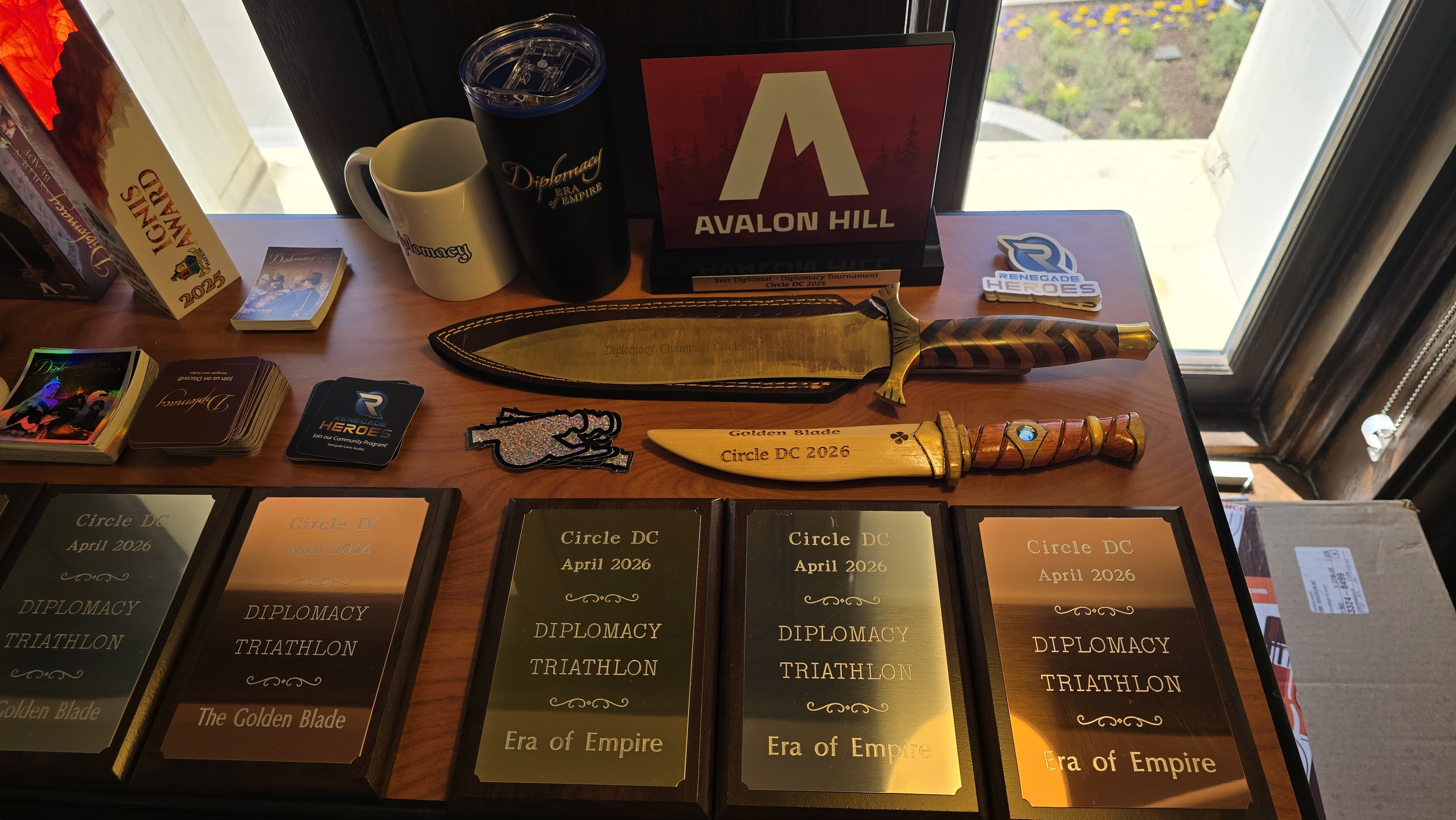
In 2025 we hosted a classical Diplomacy tournament, with Evan Walter of New Jersey winning the event. This year we modified the format for the convention with a new style of Diplomacy tournament: the Triathlon. For those unfamiliar with the format, in a Diplomacy Triathlon players compete in a three-round event, with each round featuring a different published Diplomacy game (classical Diplomacy, Era of Empire, and The Golden Blade). The winner is the best all-around player across the three games/rounds based on placement. For each game we award Gold, Silver, and Bronze plaques for the top 3 performances across all boards played. Plenty of prizes and variety in games to keep our players happy.
Circle DC is a three-day convention focused on historical & wargaming hosted at the DC History Center (https://dchistory.org/). The convention brings in game designers, publishers, media, and fans of tabletop gaming. You’ll get an opportunity to play “Twilight Struggle” against Jason Matthews or learn “Votes for Women” from Tory Brown. The convention is a golden opportunity to bring your unpublished design and schedule decades-old classics. The founder, Kevin Bertram, is a fan of Diplomacy and shows his support for our events by giving Diplomacy a separate room to ourselves.
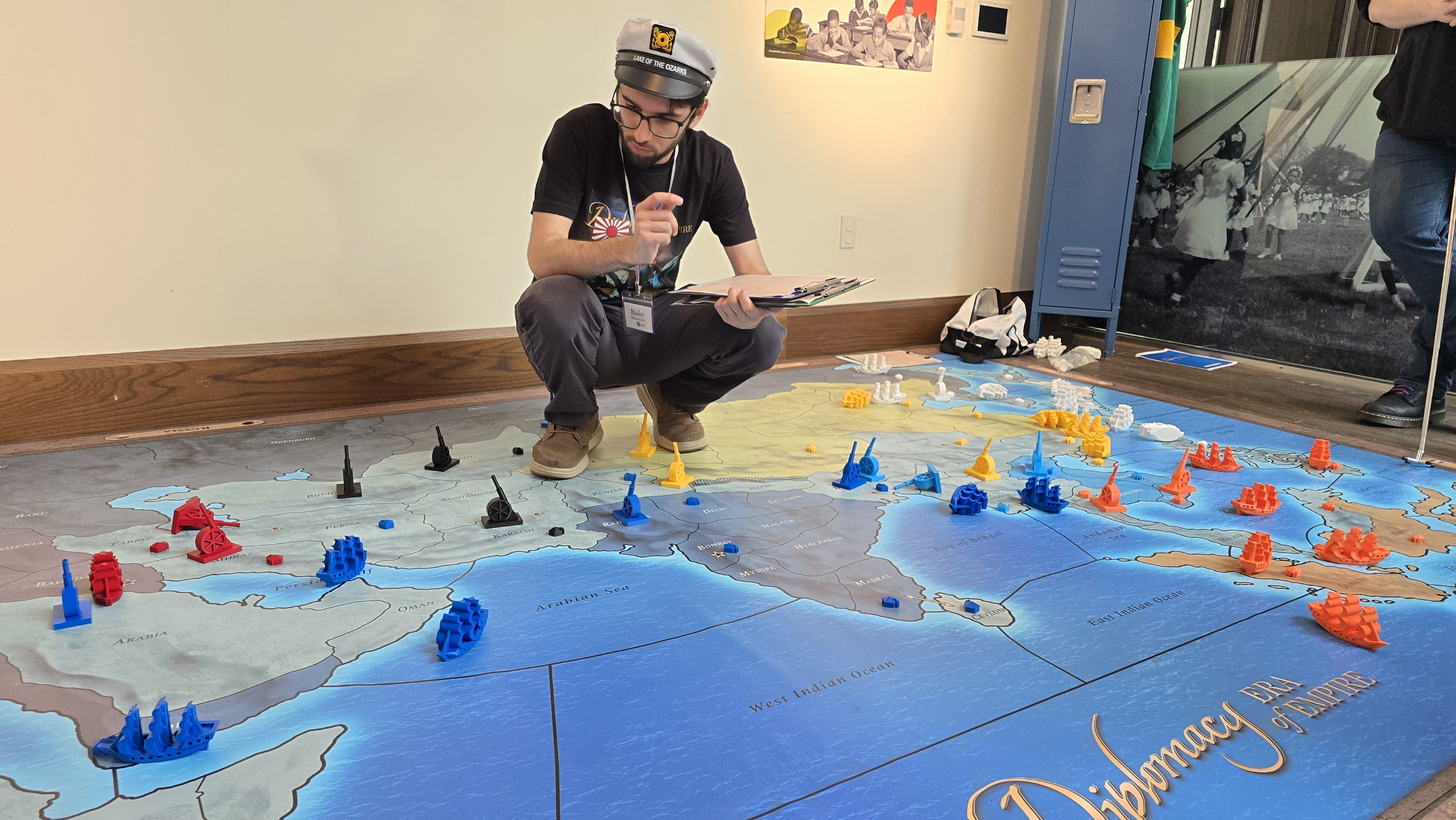
Day 1 of the event featured teaching (learn to play) events for Diplomacy. We teach both Diplomacy and Era of Empire at the same time on giant, walkable maps. This gives new or inexperienced players an opportunity to play the game (and win some prizes!). Everyone participating in the Diplomacy event this year, Triathlon or teaching games, received a free Diplomacy shirt and a Diplomacy hoodie. Renegade Game Studios also donated many games to the daily raffle for the convention. We also featured something unique this year: the first appearance of the Deluxe Diplomacy / Era of Empire Map and Deluxe Tokens, which were sent directly from the factory months ahead of their planned production release.
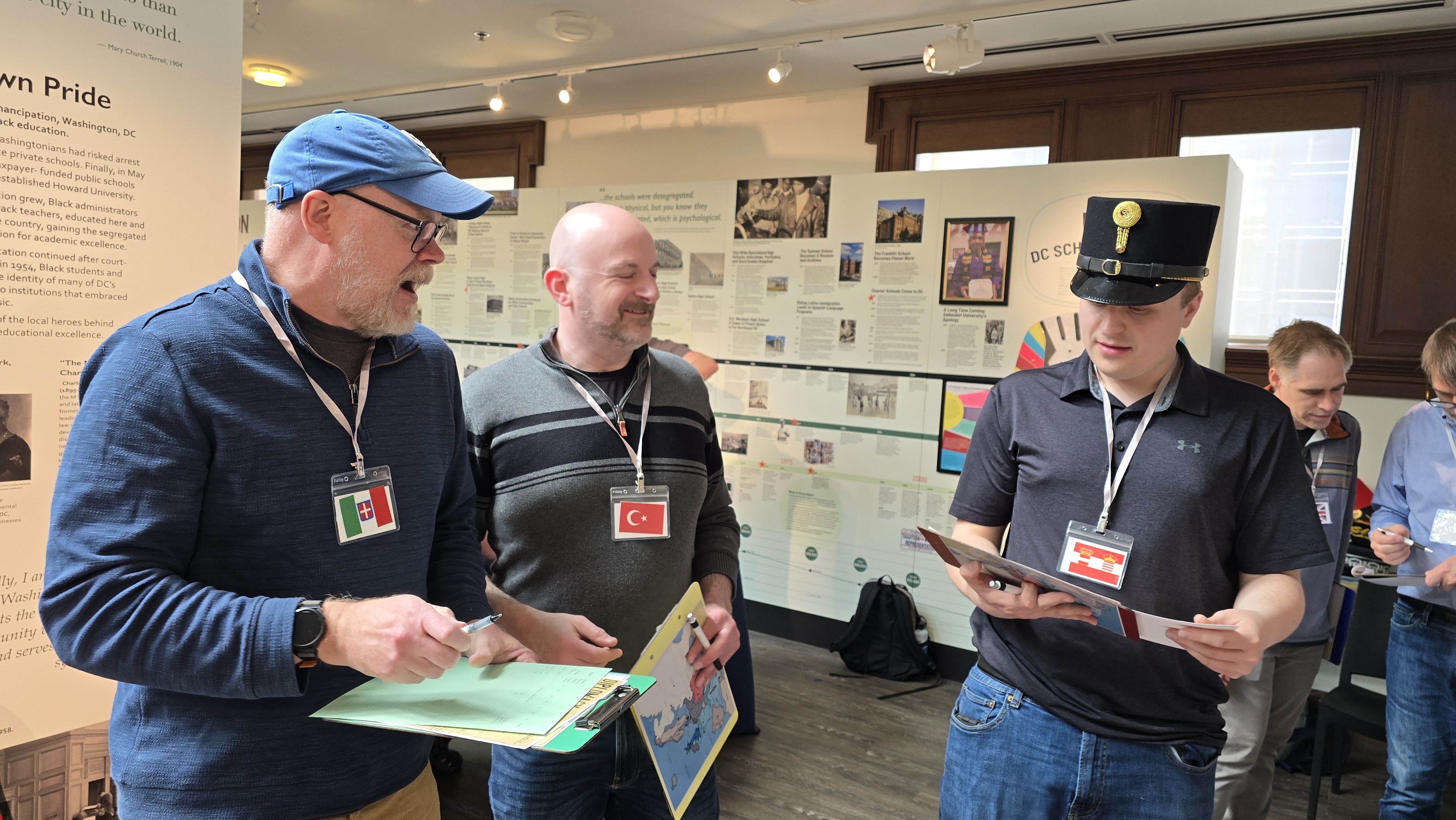
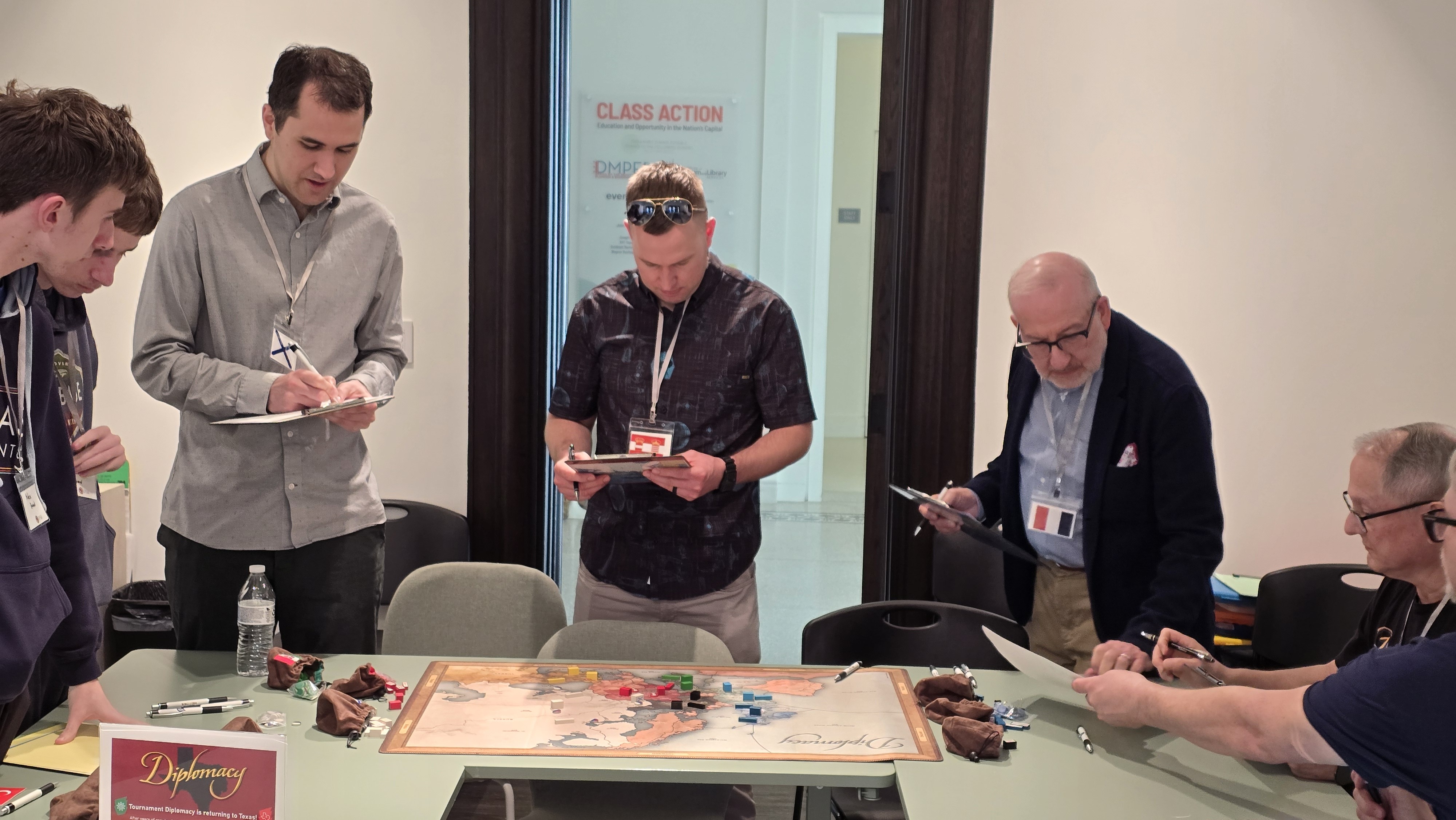
Round 1 of the Triathlon began with classical Diplomacy. Start with the familiar. We had a good mix of player experience for the first event between new players who wanted more after our teaching round and folks who’ve played for decades. In each round of the event, board assignment and Power draw was random. We split the games between the giant, walkable map outside and our separate “Diplomacy Room” on the second floor. On the deluxe map, Robert Zahn (Germany) steamrolled the board behind a Western Triple that turned into a English-German alliance end-game. His growth was made possible by an absolute dismantling of Russia, who never got to build in the game. Austria and Turkey combined on both Russia and Italy early game, not picking up on the Western Triple until it was too late. By the time they shifted focus, Germany was sitting in Tyrolia, Galicia, and Ukraine. Zahn’s Germany finished with a 13-center board top and Jason Williams’ England finished with 9-centers.
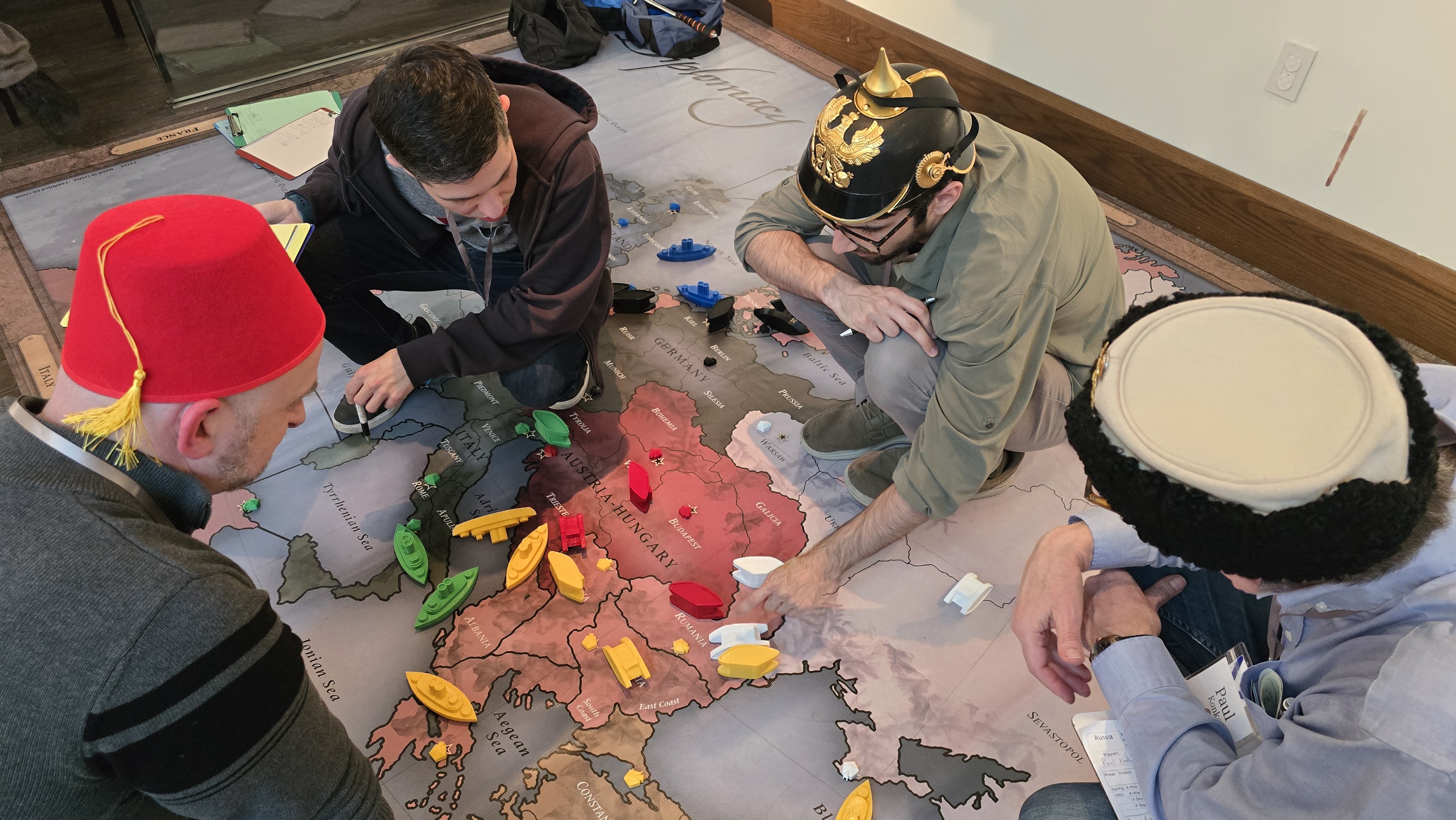
The giant map, in comparison, was a hotly contested battle of shifting alliances. Under early pressure as France, Kevin Fernandez invited Germany into his territory to help defend against pressure from Italy and England. The risky play ended up paying off, as Kevin avoided elimination and stuck around as a key player. Aram Schvey’s Turkey leveraged (maybe created?) turmoil in the east, first attacking Russia with England and then shifting toward Austria to establish a strong position. Like crabs in a bucket, the player’s changed allegiances multiple times during the game to pull others back down. There would be no runaway leader on this board. Turkey and Germany tied for board top at 7-centers each, with no players eliminated.
After the first round was complete, our players attended a planned dinner at The Capital Burger next door. The DC History Center is near the convention center, with dozens of restaurants within walking distance of the venue. As part of the Triathlon activities, we were able to provide comped dinners on Friday and Saturday evening. Throughout the weekend, Circle DC also planned multiple external activities, including visits to the Folger Shakespeare Library, the Supreme Court, various lunches & dinners, and even a trip to the Congressional Cemetery to learn about beekeeping (you get your own jar of honey too!). Social activities are a core part of Diplomacy events, and Circle DC takes this to another level.
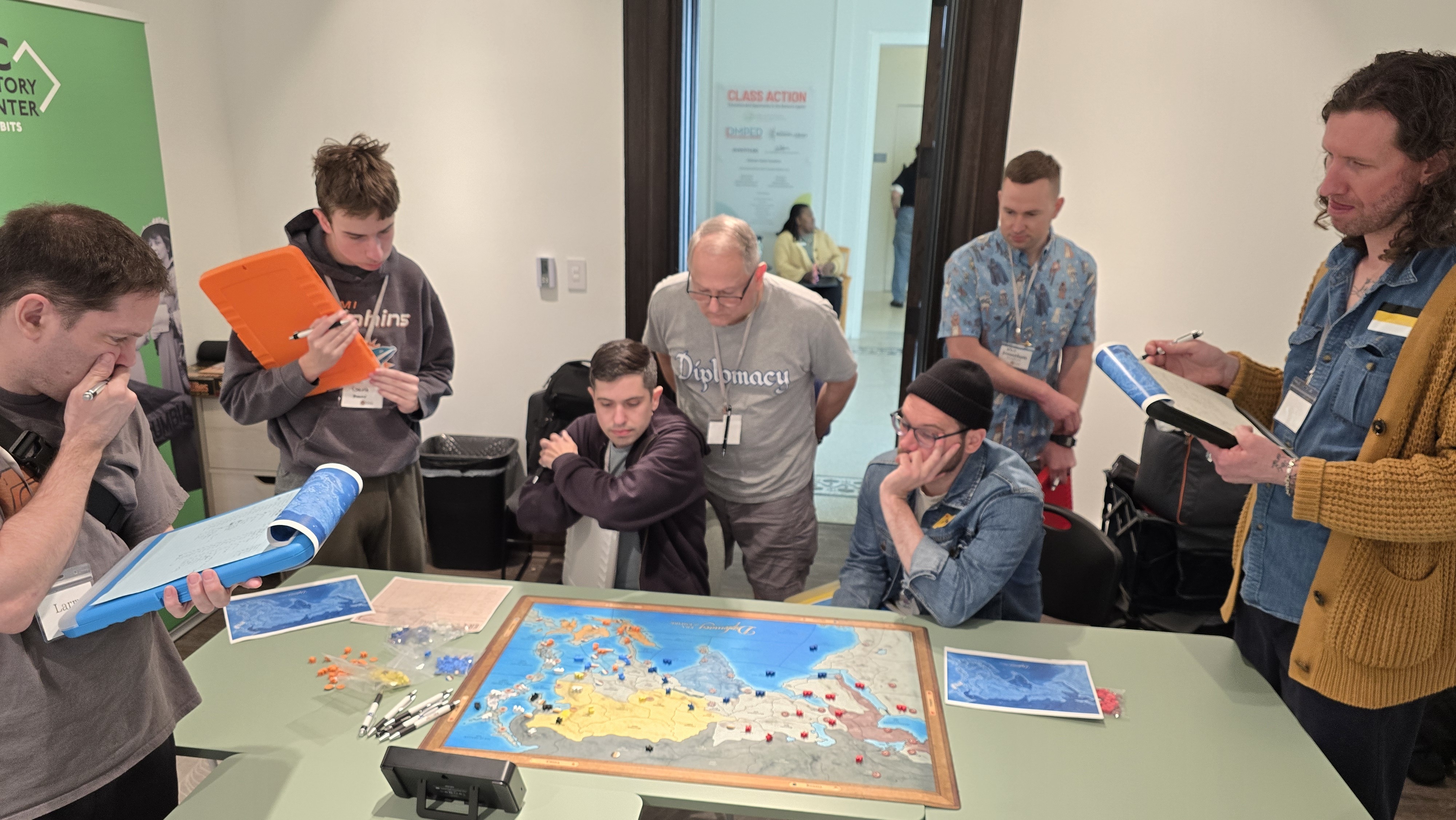
On Saturday morning Round 2 featured “Diplomacy: Era of Empire”. Released in 2025, Era of Empire transports players to the Age of New Imperialism where each Power is grasping for control over large swathes of Asia, Africa, and Europe. The game has the same core mechanics as classical Diplomacy with some added mechanics to make the experience unique. The game features “Conscription” and “Conversion” mechanics. Conscription allows players to build in any unoccupied Supply Center they own, which is different from classical Diplomacy where you can only build in your Home Centers. Conversion allows you to change Armies to Fleets and vice versa, so long as the unit is in a Supply Center during the Winter phase. The game is played on a larger map (more provinces, more Supply Centers) compared to classical Diplomacy. Most notably, given the recency of the release, there is no established meta for the game. No “named” alliances. No standard openings. At events I’ve run, this has resulted in some spectacular, exciting games with unexpected endings.
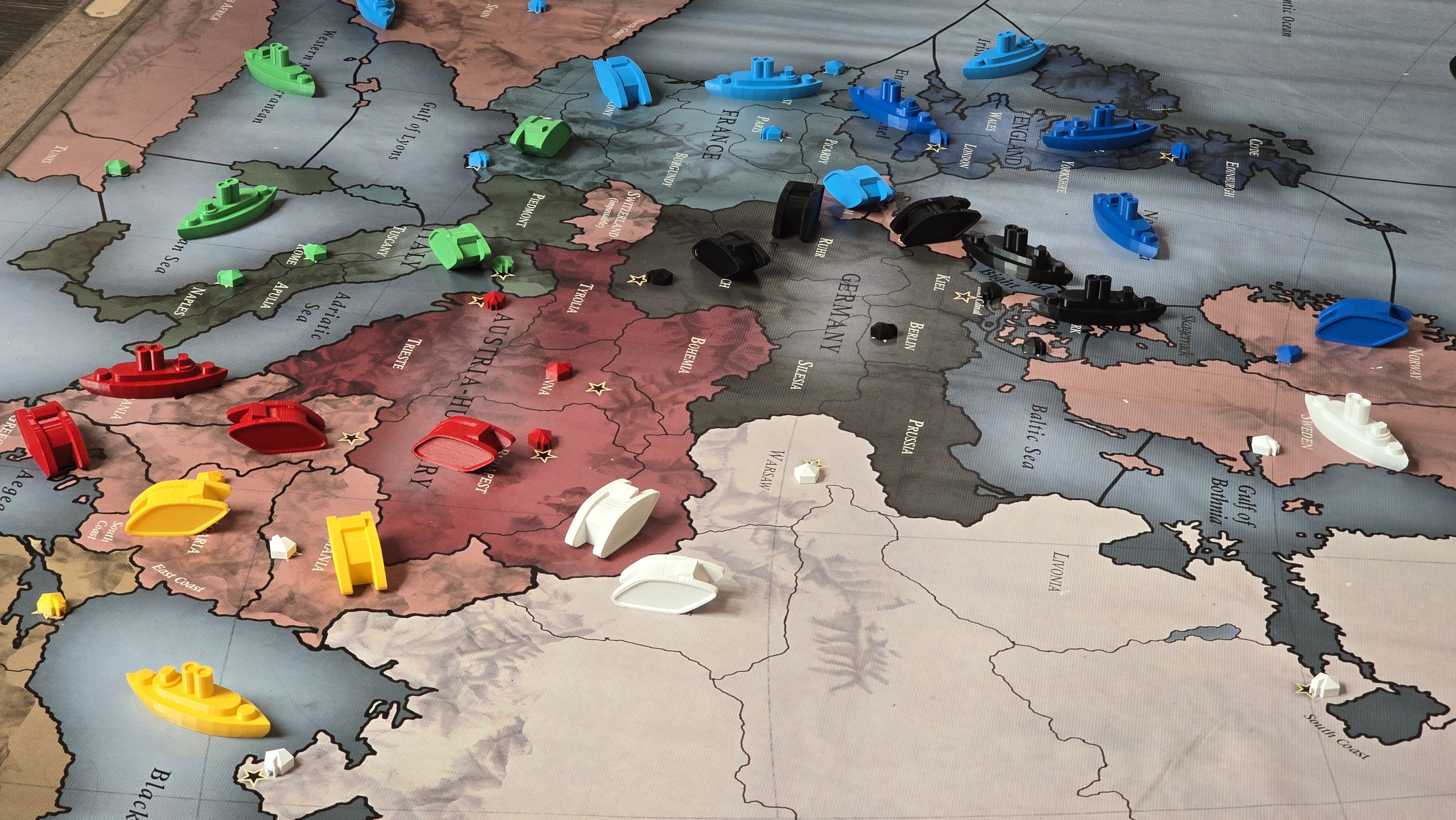
In Round 2 on the giant, walkable map we had early game dominance from Jordan Green, playing Britain. Many Powers “doubled up” on their Supply Center counts in the first year. The second year was the big swing, with attacks on Russia and France. The primary beneficiary was Andrew Burnard’s China, who moved up to 9-centers. Eventually, both were eclipsed by Blake Hakimian’s Japan, who had allied with the Dutch to carve up east Asia. Russia, led by Owen Fleming, wisely abandoned the east and focused his efforts on the West and Central Asia. Owen regrew Russia into a 7-center power by game end. However, it was Blake Hakimian’s Japan that ruled the day. He finished with a 16-center board top.
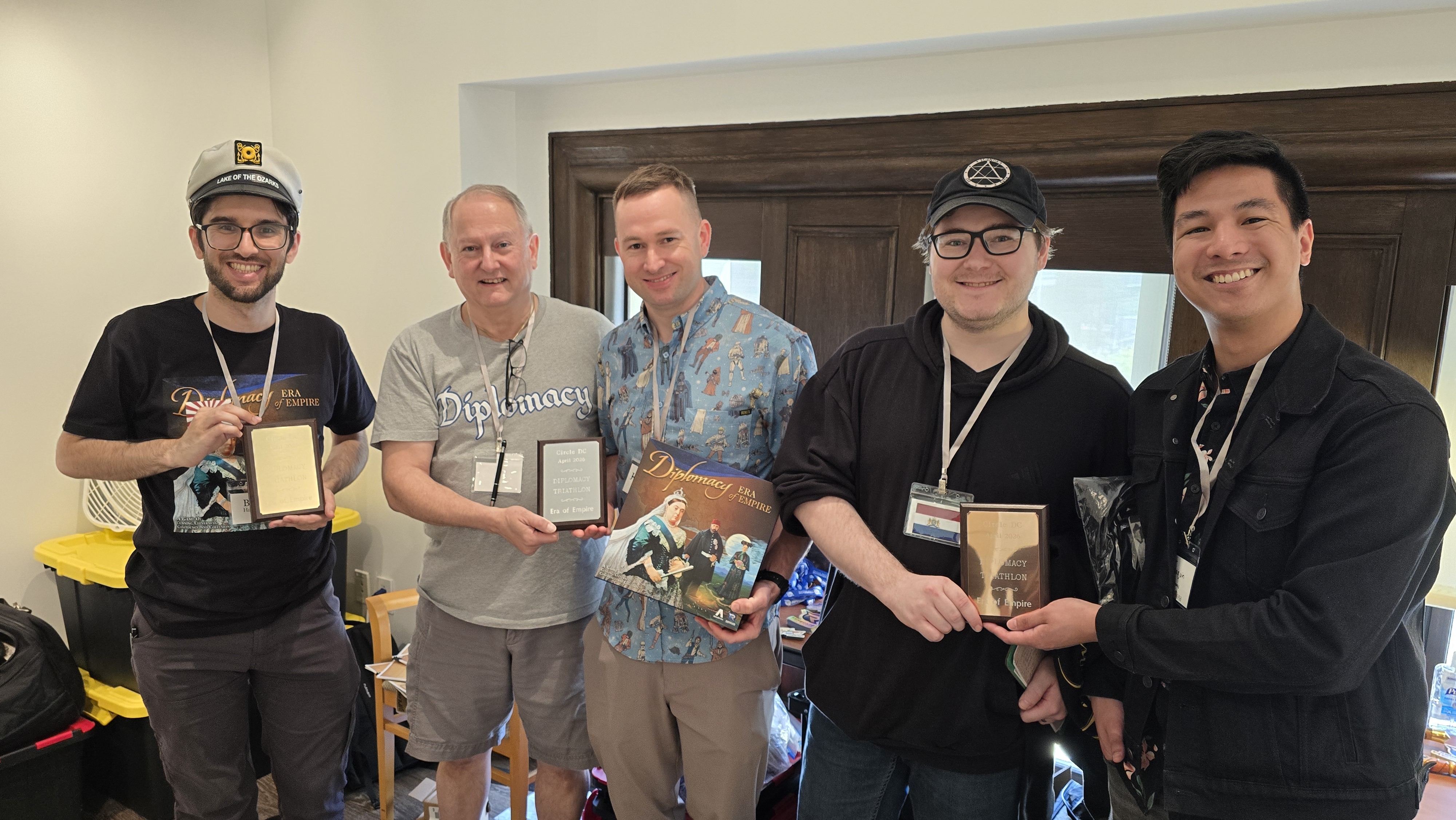
One the deluxe map, we experienced the reverse of the other game. Japan was best by three neighbors and Russia opted to abandon the West to focus his attention on the Eastern front. The British-Turkish alliance quickly divided up the neutral in Africa and the Middle East, then went to work across the map. Despite the best efforts of Kevin Fernandez’s Japan and Gavin Burnard’s Netherlands, the British-Turkish alliance continued to roll. Whit Swafford’s Turkey tied with Robert Zahn’s Britain with 14-centers each at game end, splitting the victory. The two games ended up flowing in opposite directions with two strong alliances and one Power attacked by three neighbors. A couple of great games where the players learned -- unlike classical Diplomacy -- you can’t setup a full defense if you want to be successful in Era of Empire. Swing your sword!
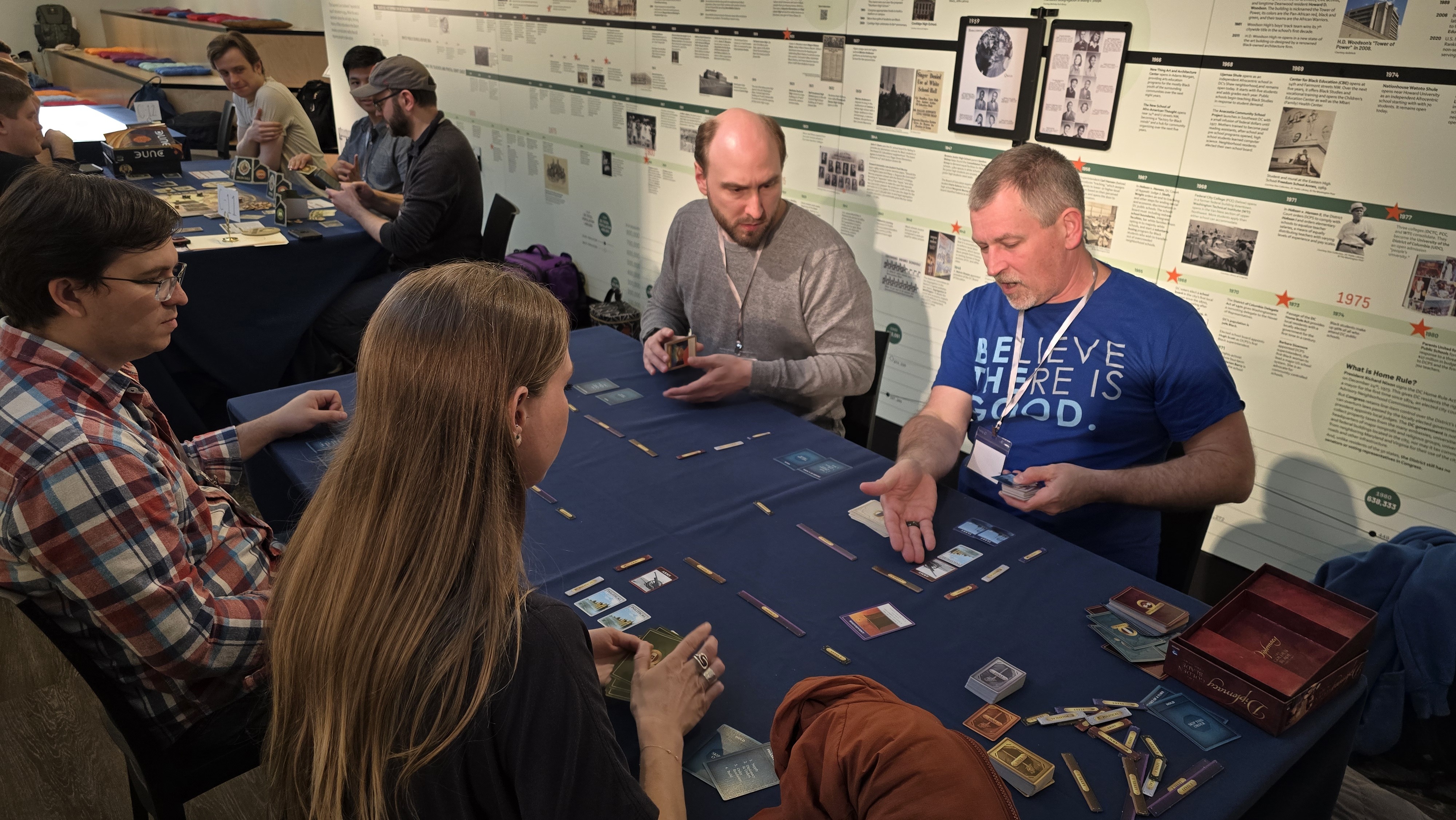
After Round 2 was complete, players left the venue for lunch while I reset the room with Rosco Schock for the final round. Rosco is the designer of “Diplomacy: The Golden Blade” card game. He drove down from his home in Lancaster, PA to both teach the game during the convention and lead Round 3 (who better to run the game than the designer?). Rosco had been teaching The Golden Blade during the convention with positive response from attendees. The Golden Blade is Diplomacy in card game form, with the same focus on negotiation and strategic play via secret Orders. Compared to classical Diplomacy, the new card game plays about 15 minutes per player and has no player elimination. Instead of racing to 18 Supply Centers (22 in Era of Empire) for an outright win, players instead race on a Power track with lanes for your Army, Fleet, and Political cards. Players have a hand of cards with Orders to play next to adjacent neighbors. Just like classical Diplomacy, nothing holds you to your word in negotiations – only when you reveal the Order cards each turn do you see if your neighbor is an ally or an enemy. Alliances shift throughout the game as players come close to a victory. The game features a lot of close, back-and-forth play with tense finishes.
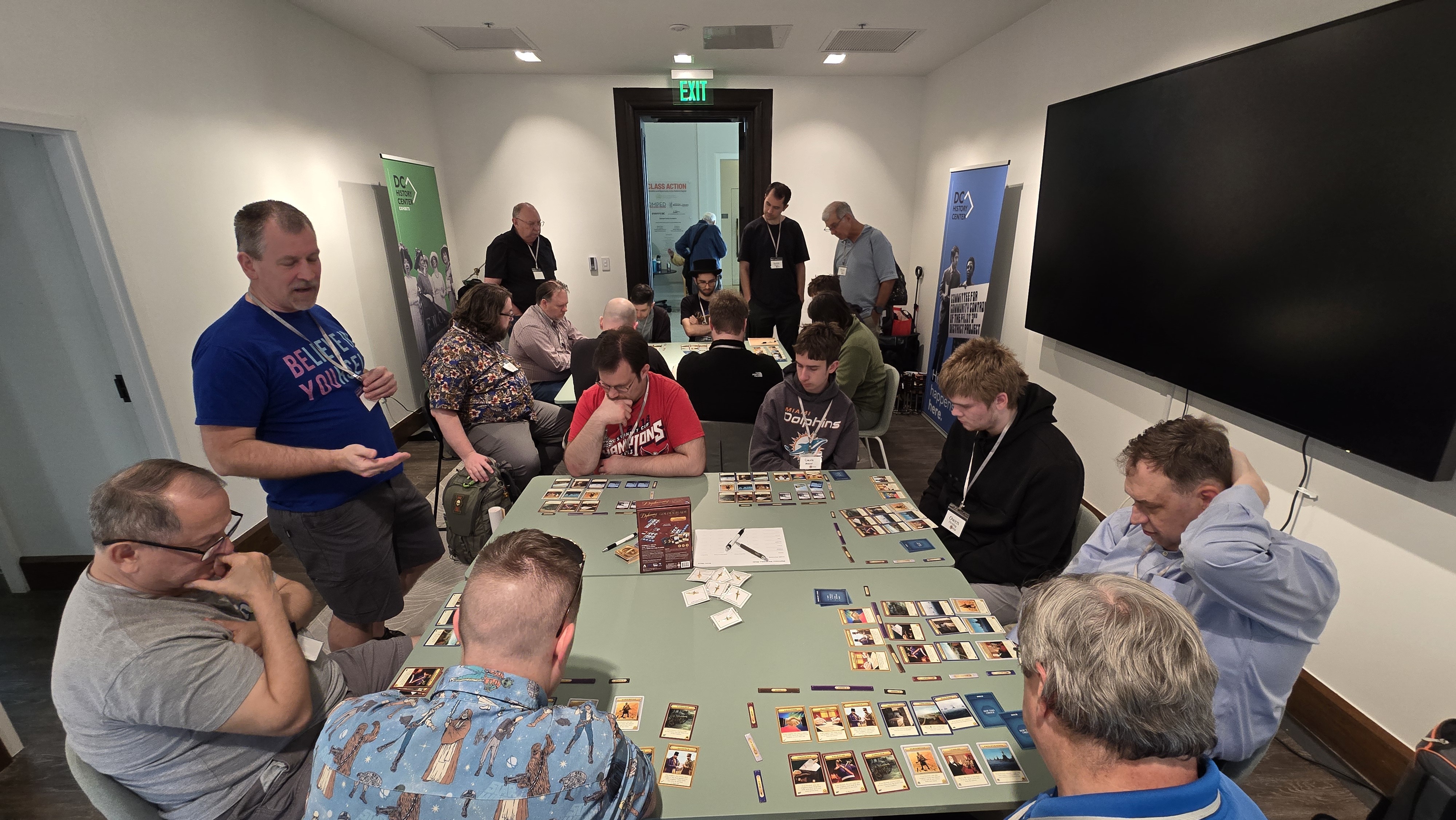
Rosco provided one last rules explanation before the start of Round 3, then we assigned the players to three tables. Each game of The Golden Blade can handle 2-7 players, compared to the 7 needed for both classical Diplomacy and Era of Empire. The tournament leaders, Blake Hakimian and Robert Zahn, both won their games of classic Diplomacy and Era of Empire in the first two rounds. It would come down to who could perform better in The Golden Blade.
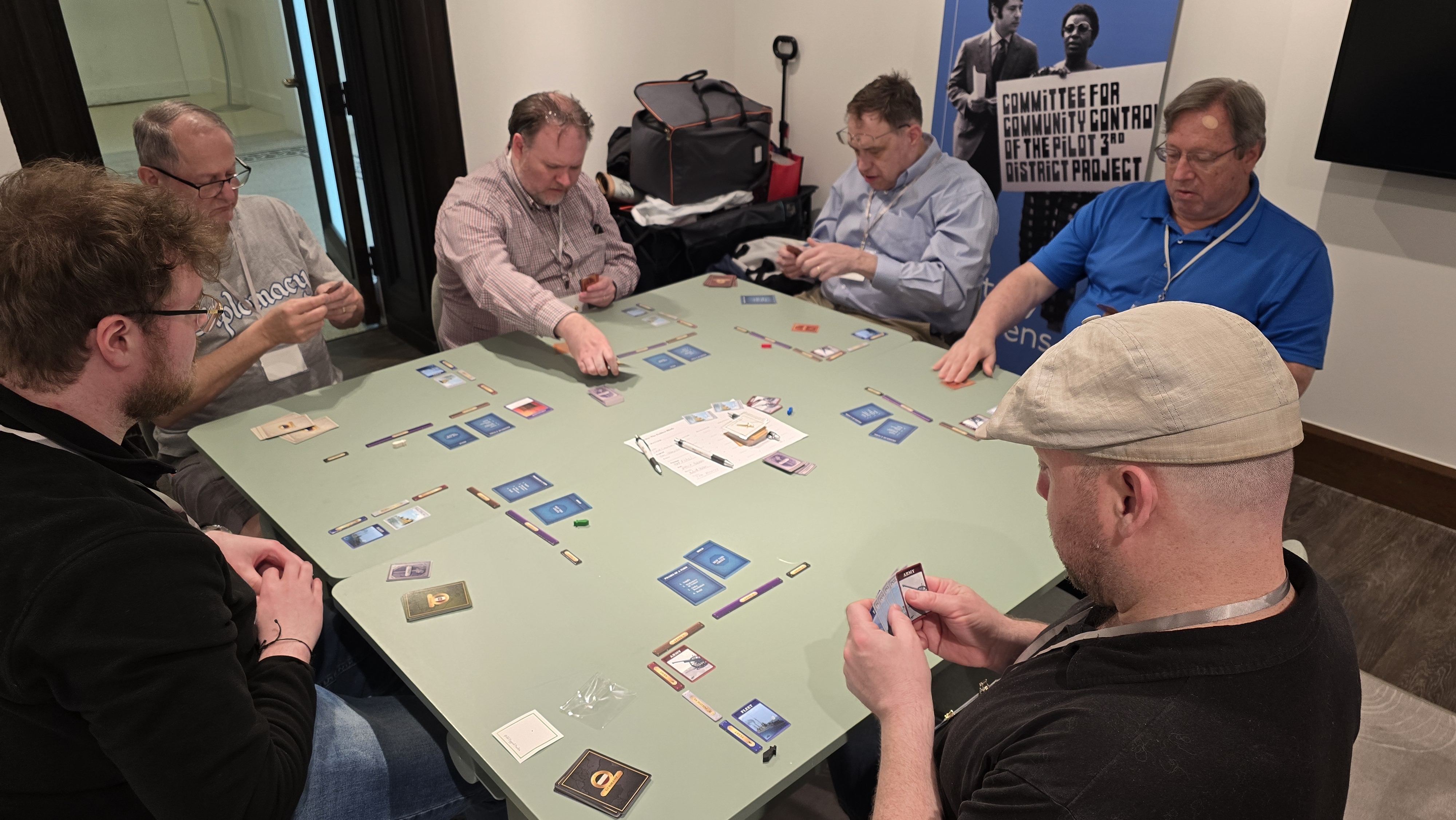
Players were on an even footing in the final round. Only a few of them had played the game previously (at Battlefront Dayton in 2025), so much like Era of Empire, there was no established meta. In fact, the game had just started to ship from Renegade in February. From the three games in Round 3, several players clearly separated themselves from the others in a key aspect: table talk. In many social deduction card games, it’s essential to flex your muscles via over-the-table negotiation. Diplomacy is all about negotiation. Whenever another player moved perilously close to victory, the smart players would call this out publicly. They weren’t just negotiating with their neighbors – they were negotiating with the entire board. This same lesson applies to Diplomacy. You may be playing Turkey in the corner of the board, but you need to talk to France every turn, regardless of whether you border them or not. You have common neighbors and you don’t want anyone to establish a dominant position.
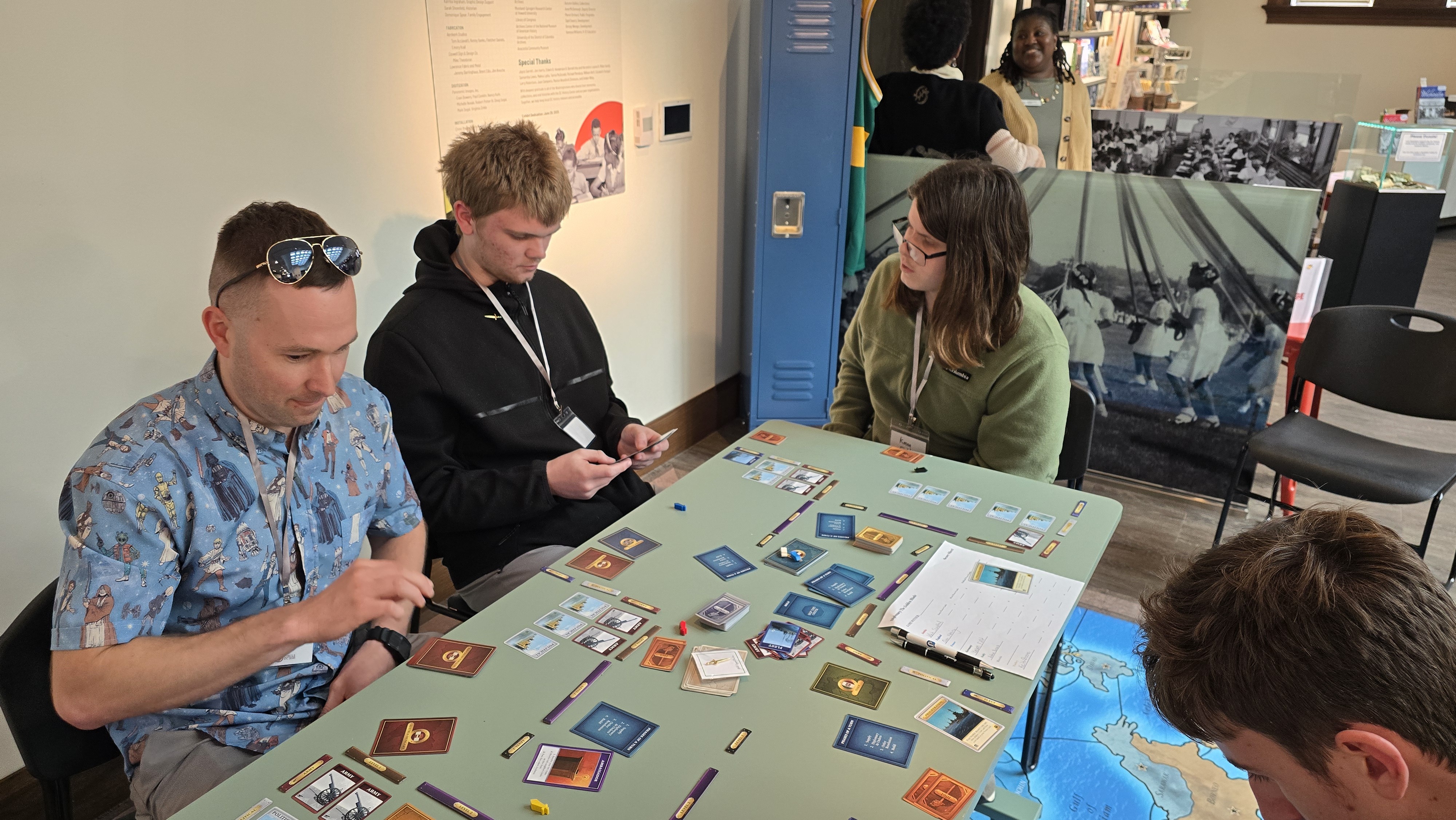
The players who quickly translated their classical Diplomacy skills to The Golden Blade were the most successful. On one board, that involved playing the tried-and-true role of
“I’m so weak -- that guy over there is the real threat; let’s attack him!”. Two of the three games ended with two players simultaneously reaching level 3 of the Power track. The tiebreaker rules go to the level of the next highest Power track, which determined our two winners for each game. Nigel Mease, Keith Boone, and Derek Croxton emerged victorious at their respective tables.
As for our two tournament leaders coming into the final game, Zahn opted to build up his Power tracks safely at his table, whereas Blake went for the outright victory on his table. There would be no free path to victory, with both leaders taking some attacks from their neighbors seeking a share of glory. At the end of all three games, Zahn edged out Blake by one placement point for the championship. A razor thin margin of victory in The Golden Blade.
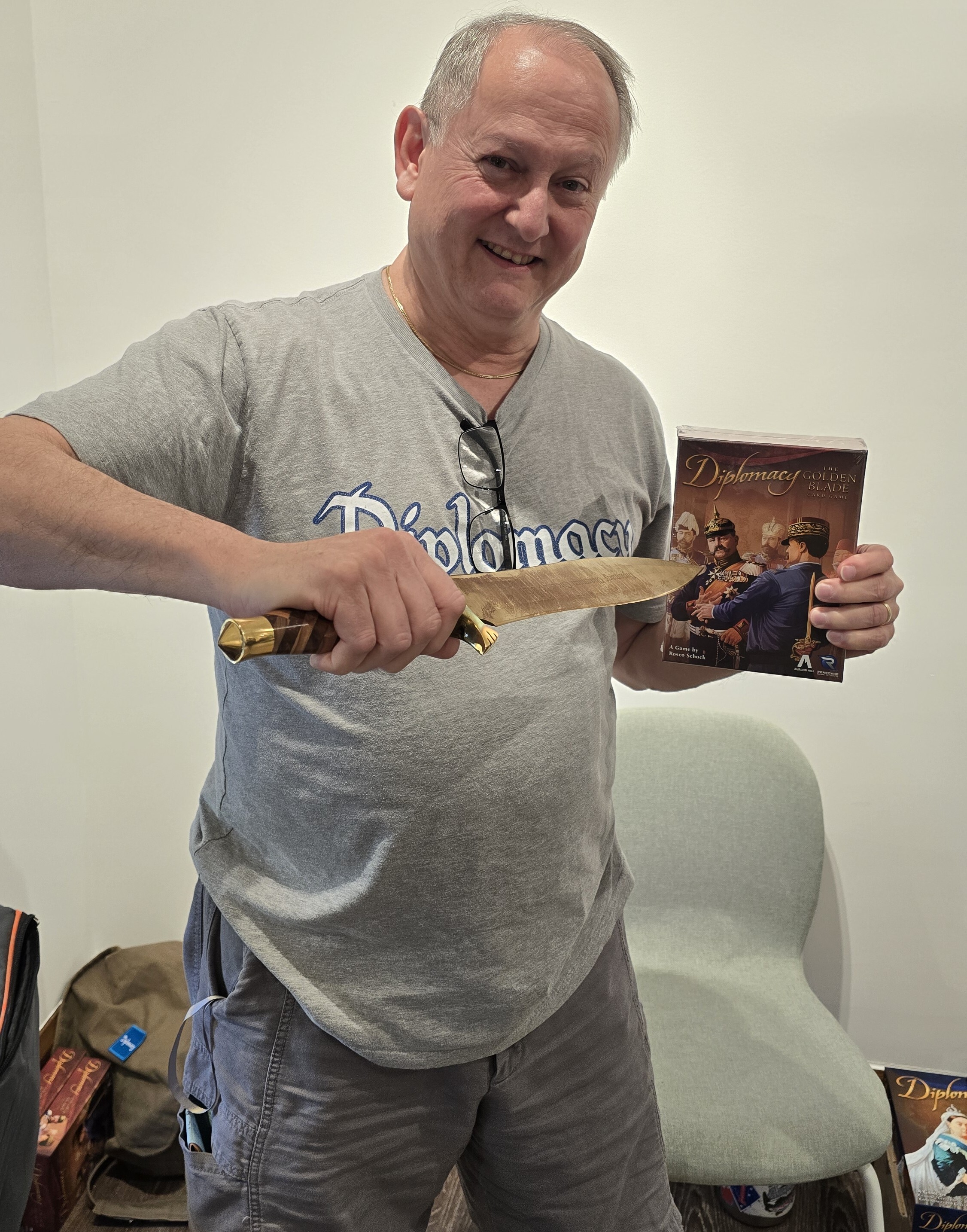
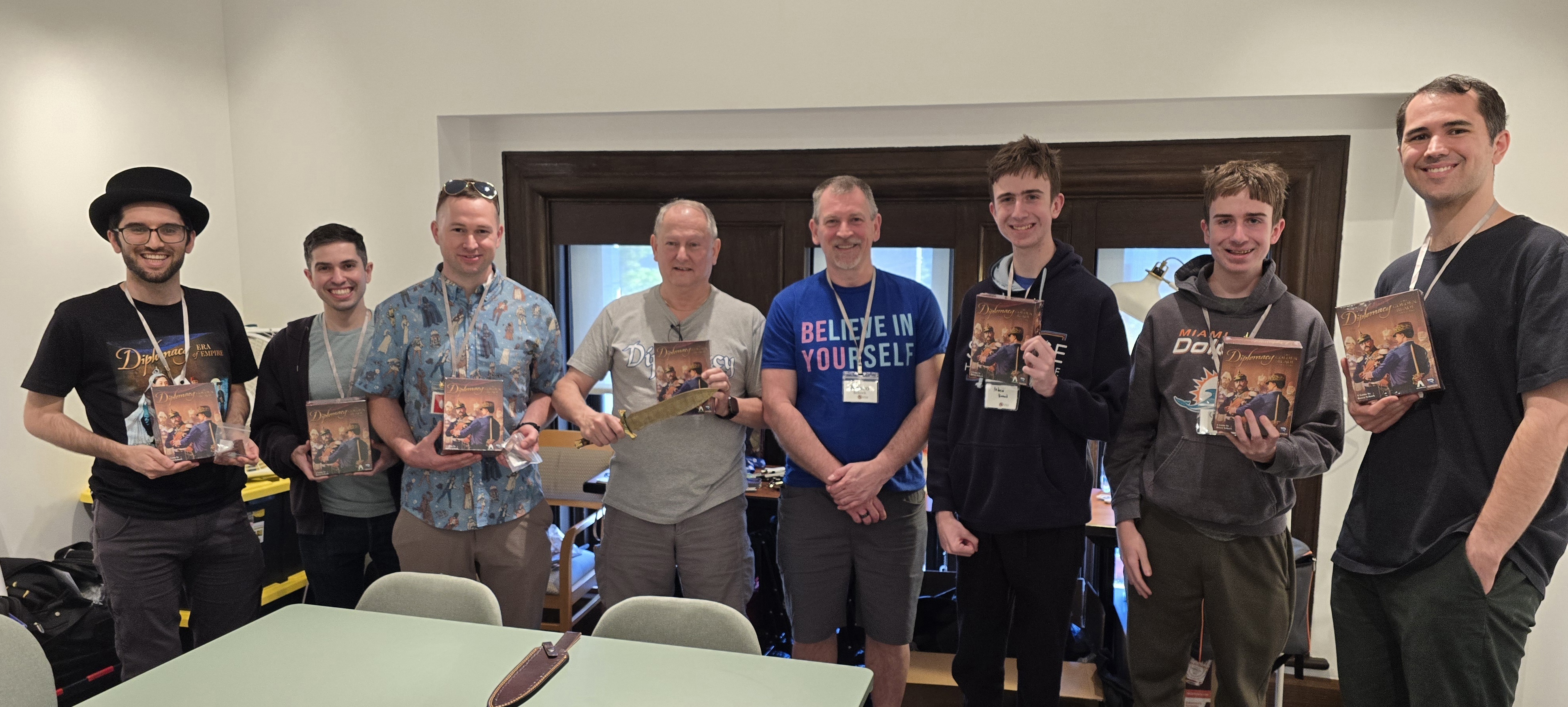
Congratulations to Robert Zahn on winning the Circle DC Diplomacy Triathlon! This is the second such Triathlon event conducted, with more to come at BGG Spring, Battlefront Dayton, and BGG Con. For his efforts, Zahn won an engraved Golden Blade to go with his championship. A worthy and fitting trophy for the event. Robert’s primary competitor in the final, Blake Hakimian, took home 2nd place. A fantastic finish for his first ever tournament. Whit Swafford, who played in his first Diplomacy tournament at last year’s Circle DC, rounded out the podium at 3rd place.
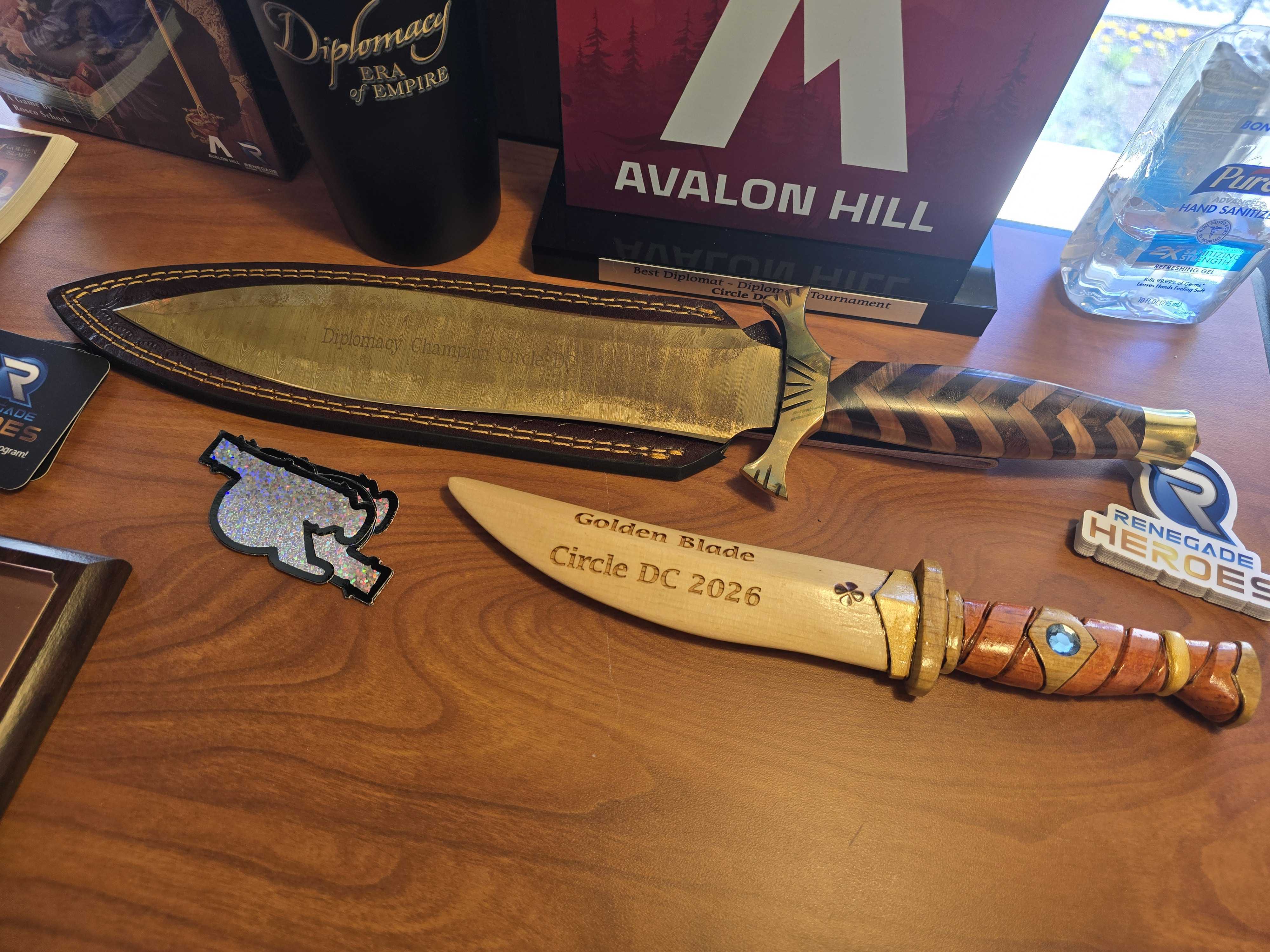
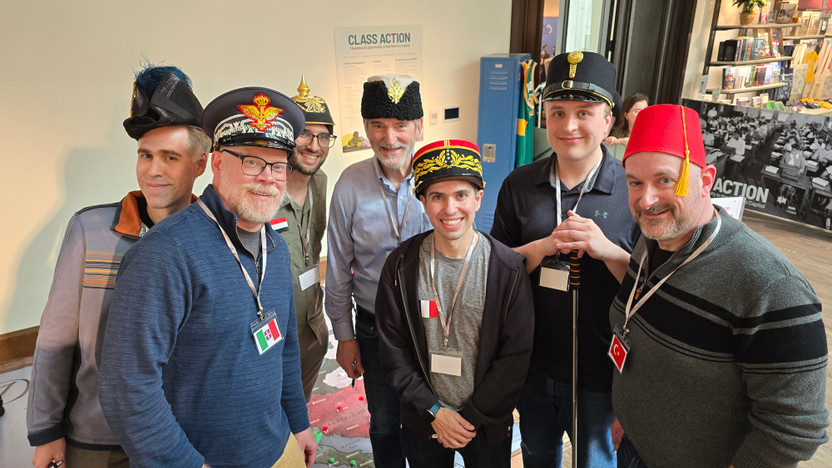
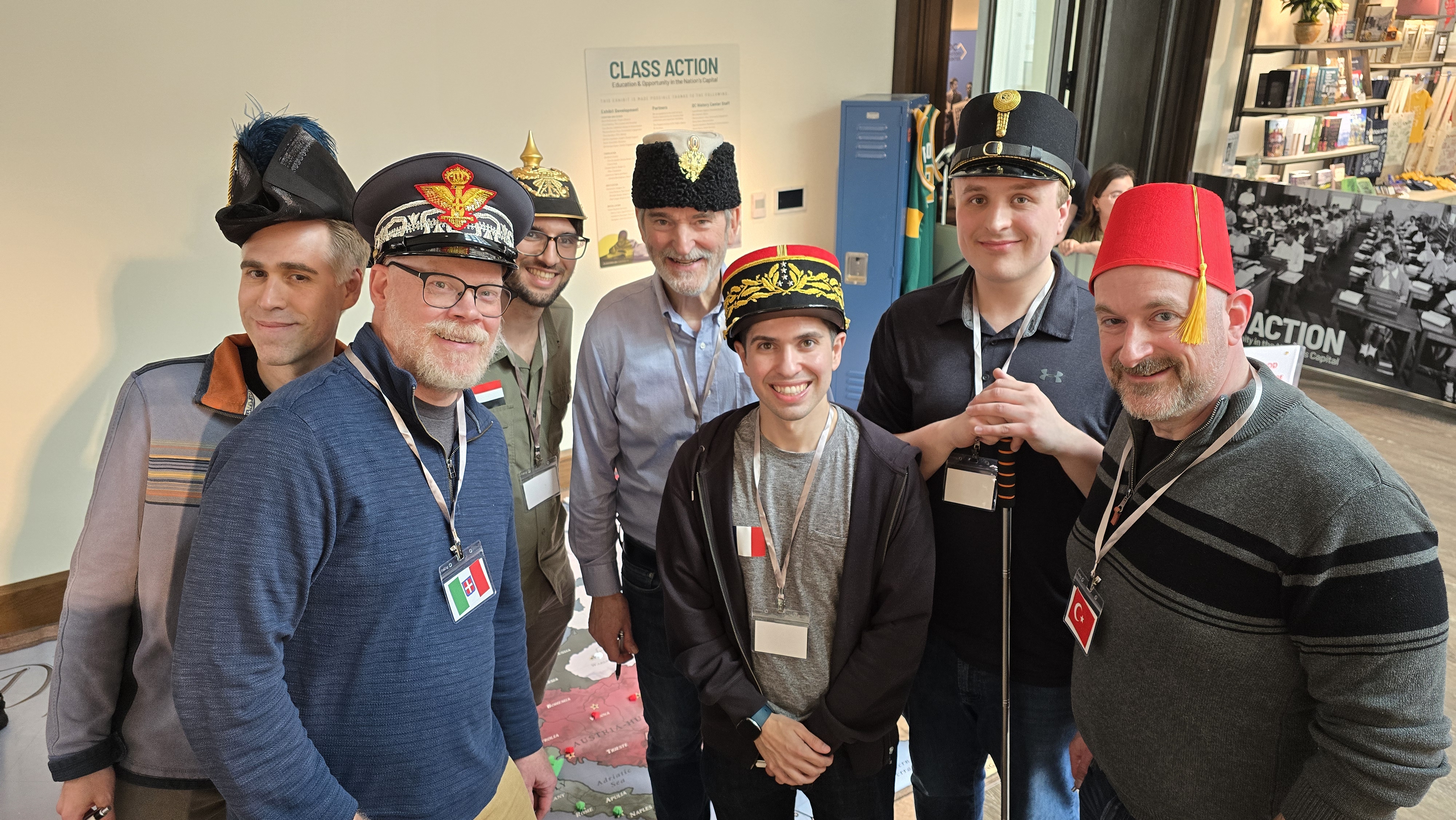
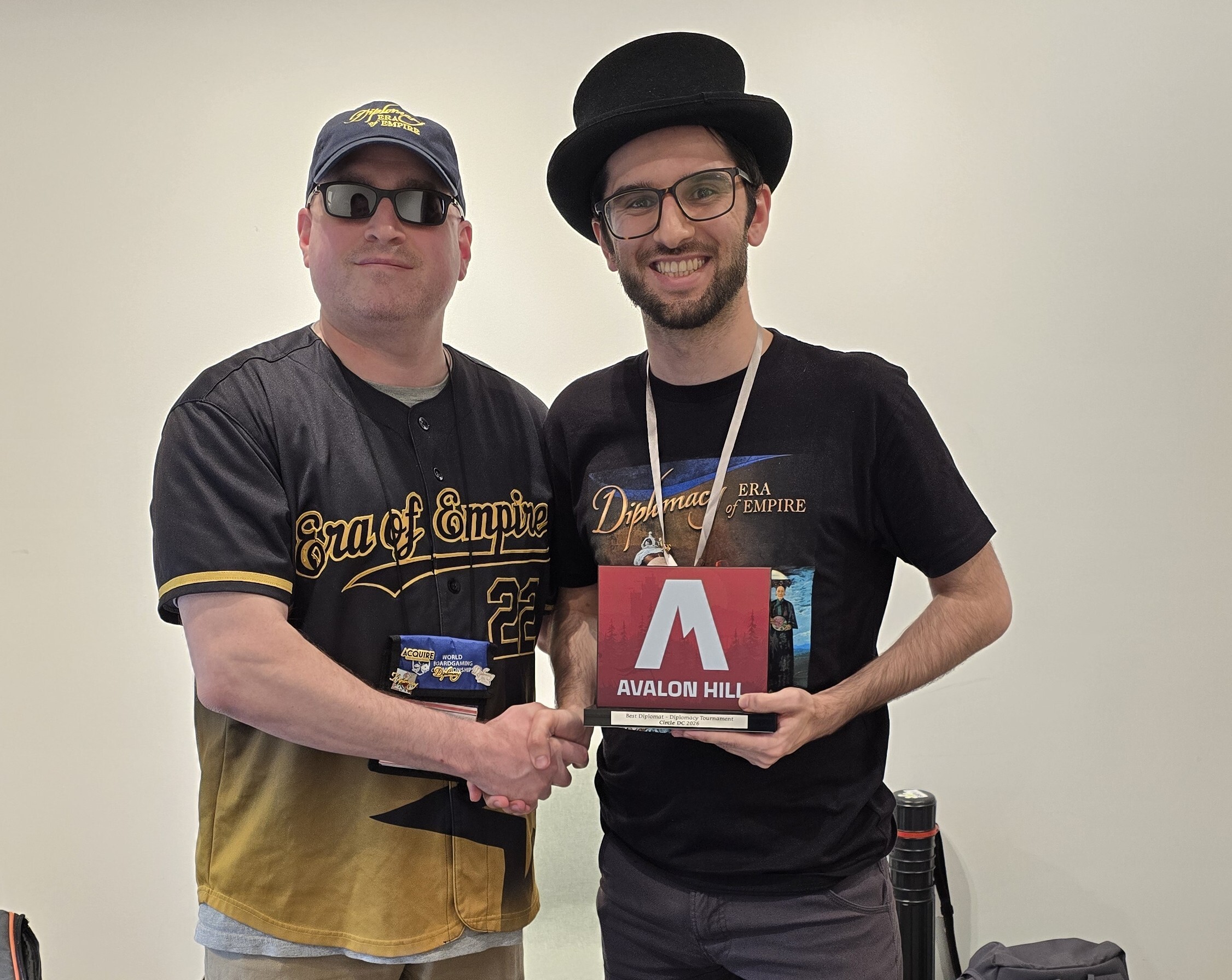
The podium (top 3) finishers received a Diplomacy hat. We awarded Blake Hakimian the coveted “Best Diplomat” award for his performance throughout the event. He participated in the teaching round, helped adjudicate the Era of Empire round, switched into new themed hats every day, and was an absolute pleasure to be around (as noted by many other players). Designer Rosco Schock received the honorary “Golden Blade” award, a carved wooden blade, as thanks for his volunteer work throughout the convention. Kevin Fernandez, DC native, finished the tournament in 4th place and took home the “Best Propagandist” award. Kevin fought through attacks in each of his games and managed to pull a rabbit out of his hat in each game, picking up solid placement scores to claim 4th. Brothers Andrew and Gavin Burnard finished 4th (tied) and 6th place in their first ever tournament. To round out our top board, former World Boardgaming Championships Diplomacy winner Keith Boone finished 7th. Each of the top seven finishers received a copy of The Golden Blade card game.
We finished the event with a trip to “Founding Farmers & Distillers” for comped dinner & drinks. Just like the tournament itself, we were joined by both new and experienced Diplomacy tournament competitors. Circle DC finishes each night at a reasonable time, which means we can make reservations at local restaurants for group meals each evening. A wonderful, friendly way to end a weekend of backstabbing on the board.
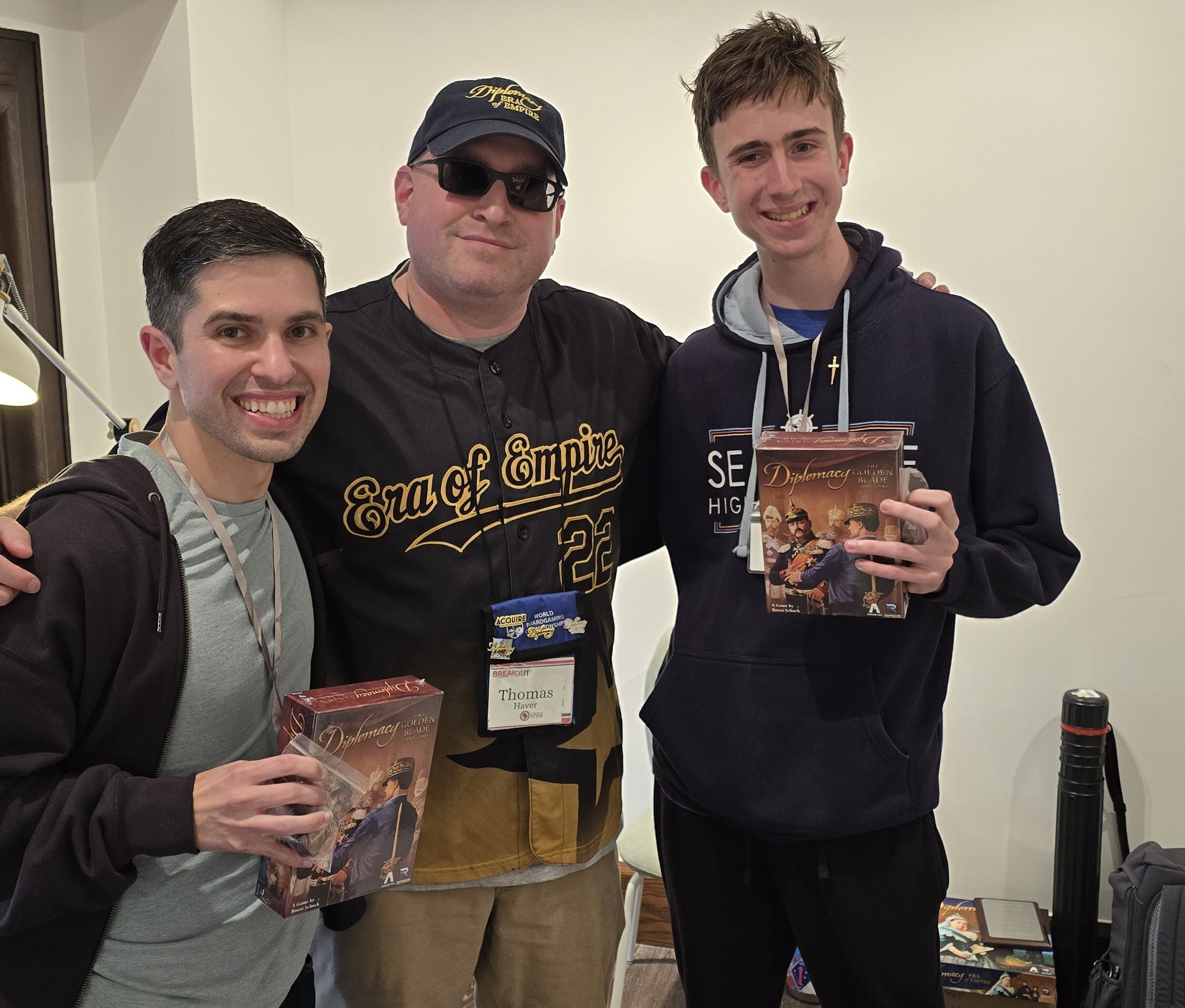
Overall, the Diplomacy Triathlon format was popular, making it our largest event in four years in Washington, DC. 34 players competed in the tournament event, with dozens more participating in teaching events during the convention. Many thanks to Kevin Bertram and all the volunteers associated with Circle DC for making the convention a memorable experience for us all. Thanks to Renegade Game Studios for sponsoring the event. Lastly, Congrats to the winners listed below and see you next year!
Top Board:
1st Robert Zahn
2nd Blake Hakimian
3rd Whit Swafford
4th (tie) Kevin Fernandez
4th (tied) Andrew Burnard
6th Gavin Burnard
7th Keith Boone
Classical Diplomacy:
Gold - Robert Zahn
Silver - Blake Hakimian & Aram Schvey
Bronze - Jason Williams
Era of Empire:
Gold - Blake Hakimian
Silver - Whit Swafford & Robert Zahn
Bronze - Joaquin Matamis & Samuel Planck
Golden Blade:
Gold - Nigel Mease
Silver - Keith Boone
Bronze - Derek Croxton
Best Diplomat - Blake Hakimian
Best Propagandist - Kevin Fernandez
Golden Blade (honorary) - Rosco Schock